
Best Steel & Cement Brands for House Construction in Chennai (2026)
Steel and cement are 28–34% of your material value and the two items most often substituted on site. This guide explains IS 1786 steel grades, the brands used in each Silux package, cement type selection for slabs and plaster, and the four checks that verify any delivery before it reaches your slab.
Steel and cement together account for roughly 28–34% of the material value of a residential build in Chennai. They are also the two items most often quietly substituted on site. This guide breaks down every grade and brand that appears in a Silux Construction specification sheet — and explains exactly how to verify each one before it is poured into your slab.
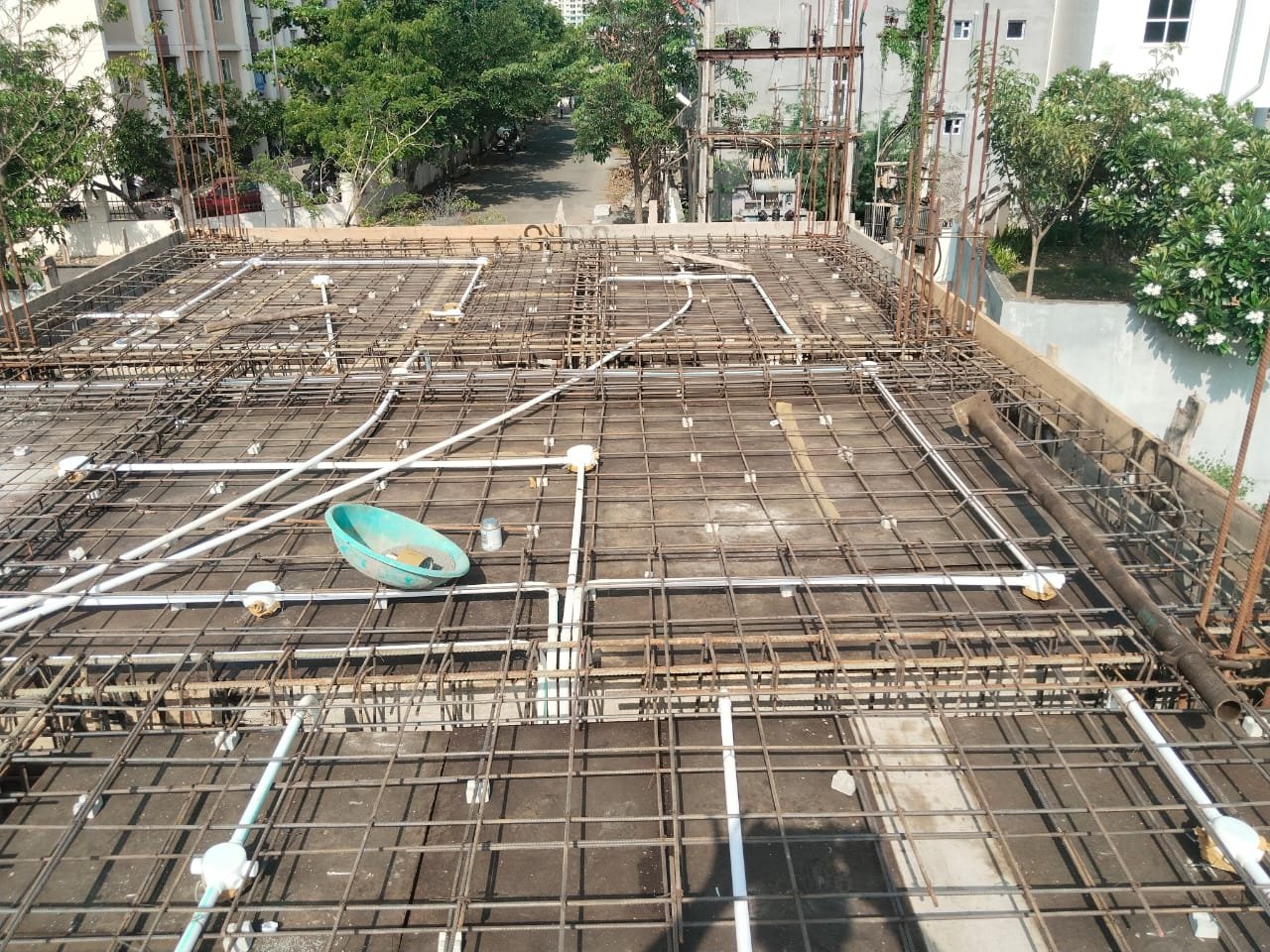
Price Your Build with a Fixed Brand Sheet
Every Silux package locks steel brand, cement brand, tile size, fitting budget and paint system in writing. See what your tier includes before you commit.
Open the Cost Calculator1. Why brand specification, not the headline rate, decides your real cost
Two builders can both quote ₹2,199 per sq ft and deliver dramatically different buildings. The difference hides inside one line of the quotation: steel. A 1,800 sq ft G+1 house consumes roughly 6–7 tonnes of TMT steel. The spread between an unbranded secondary-melt bar and a BIS-certified primary producer bar is ₹8,000–₹14,000 per tonne in the Chennai market. That is a ₹50,000–₹95,000 swing buried in a single material line — before we even talk about cement, tiles or fittings.
This is why we publish a brand-level specification sheet for every tier instead of a vague “branded materials” promise. You can compare the full sheet on our construction cost calculator page, and it is reproduced tier by tier below.
Want to Know the Exact Cost to Build on Your Plot?
Select your built-up square footage and preferred material grade for an instant itemized BOQ quotation tailored to Chennai & Vellore bylaws.
2. TMT steel grades explained in plain language
All reinforcement steel in India is governed by IS 1786:2008. The grade name tells you two things: the minimum yield strength in N/mm², and whether the bar carries a minimum elongation guarantee (the trailing “D”).
| Grade | Min. Yield Strength | Ductility Guarantee | Where we use it |
|---|---|---|---|
| Fe 500 | 500 N/mm² | No elongation guarantee | Rarely specified for homes; avoid for seismic zones |
| Fe 500D | 500 N/mm² | Min. 16% elongation | Older structures, light load-bearing work |
| Fe 550 | 550 N/mm² | No elongation guarantee | Not recommended for residential RCC in Chennai |
| Fe 550D | 550 N/mm² | Min. 14.5% elongation & superior bendability | Standard across all four Silux packages |
Swipe horizontally to see every column
The “D” matters in Chennai specifically. Coastal soil and saline groundwater tables accelerate chloride attack on reinforcement. A ductile bar bends rather than fractures under load reversals, and ductility is the property that buys you warning before failure. It is not a specification you should trade away to save ninety paise a kilogram.
3. Which steel brand sits in which package
We deliberately use four different steel brands across the four tiers so that the jump in price buys a genuinely different material chain — not just a nicer paint colour.
| Package | Rate per sq ft | Steel brand | Cement brand | What actually changes |
|---|---|---|---|---|
| Basic | ₹1,949 | Any ISI-certified brand (Fe 550D) | Any ISI-certified brand | Grade and certification are guaranteed; the mill is not fixed |
| Standard | ₹2,199 | ARS | Zuari / Chettinad | Named primary-producer steel with predictable rolling tolerance |
| Premium | ₹2,499 | Isteel | Ramco / Dalmia | Higher finish consistency, tighter surface tolerance, 10 ft ceilings |
| Luxury | ₹2,900 | Tata Tiscon / JSW | UltraTech / Ramco / Coromandel | M25 RCC instead of M20 — a genuine structural upgrade |
Swipe horizontally to see every column
A note on ‘any ISI-certified brand’
The Basic package genuinely permits any ISI-certified steel. That is not a loophole — it is a deliberate choice for budget rental builds and farmhouses where the structural demand is modest. What it does not permit is secondary-melt or rerolled steel, or a bar with no rolling marks. Our site engineer checks the BIS licence number and the heat number on every consignment regardless of tier.
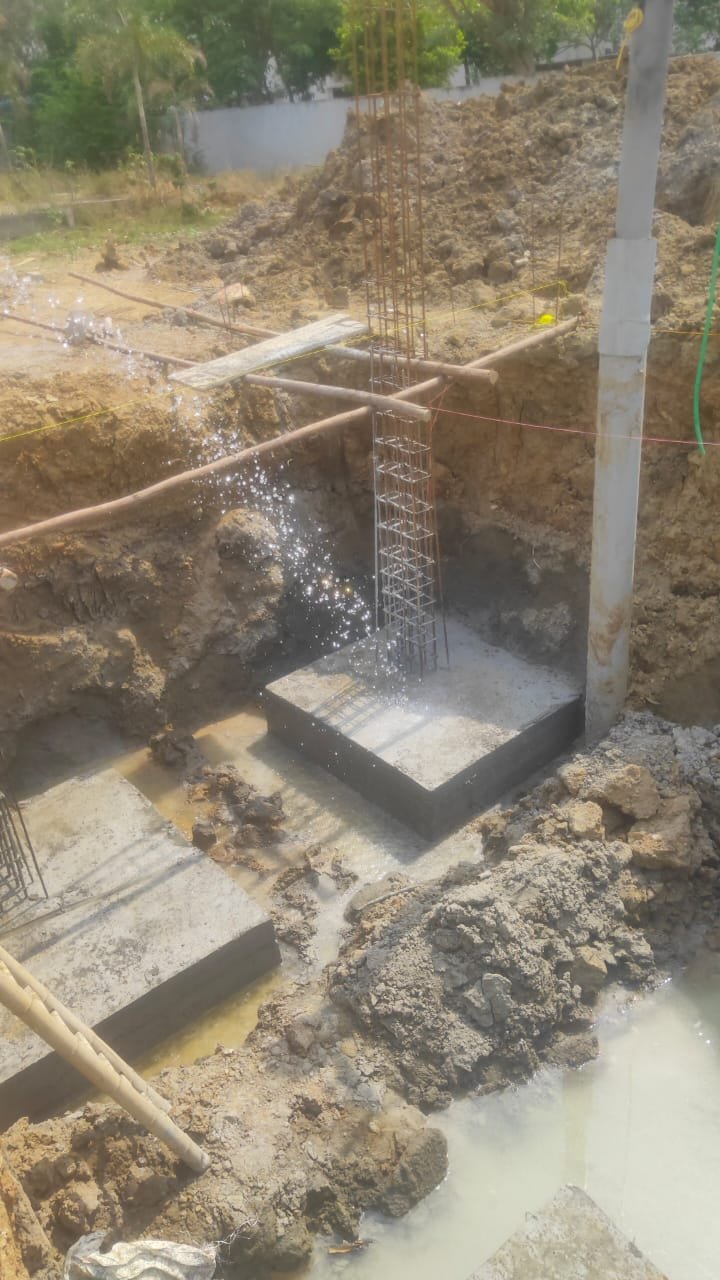
4. Cement: OPC, PPC and which one belongs where
Cement choice is application-specific, not prestige-specific. A ₹430 bag of OPC 53 and a ₹380 bag of PPC are both perfectly good cements — they are simply good at different jobs.
| Cement type | Best used for | Avoid for | Typical Chennai price |
|---|---|---|---|
| OPC 53 Grade | Slabs, columns, beams, footings, load-bearing RCC | Long-open plaster work (sets faster than needed) | ₹400 – ₹450 per 50 kg bag |
| PPC | Brickwork, plastering, non-structural fills, masonry | High-grade structural RCC above G+1 | ₹360 – ₹400 per 50 kg bag |
| PSC | Marine exposure, sump linings, coastal plinth protection | Decorative finishing coats | ₹390 – ₹430 per 50 kg bag |
Swipe horizontally to see every column
Across all four Silux packages the concrete design mix is M20, rising to M25 only in the Luxury tier. M20 delivers a characteristic compressive strength of 20 N/mm² at 28 days and is more than adequate for a G+1 or G+2 residence designed to IS 456. M25 adds roughly 25% compressive capacity and is worth the money when you are spanning longer distances, adding a stilt parking level, or planning a future G+3.
5. Aggregates, M-Sand and the invisible half of the mix
Roughly 70% of a concrete mix by volume is aggregate and sand, and this is where quality silently collapses. River sand mining in Tamil Nadu has been restricted for years, so the honest specification is double-washed M-Sand for concrete and P-Sand for plastering, both sieve-graded and silt-tested.
- Aggregates: 20mm and 40mm machine-crushed blue metal, free of clay and flaky particles (₹45–₹60 per cft in Chennai)
- M-Sand: double-washed, silt content under 3%, tested at the plant with a silt test bottle on arrival
- P-Sand: used for plastering because it holds a smoother finish and reduces shrinkage cracks
- Water: potable, free of chlorides and sulphates — never bore water from a saline well
6. How to verify every delivery on your site
You do not need to be an engineer to protect your own build. These four checks take ten minutes per delivery and catch almost every substitution attempt.
- GST invoice: brand, grade, quantity and GSTIN printed on a proper tax invoice — not a handwritten chit
- Rolling marks: embossed directly on the rebar, showing the producer and the grade (e.g. a bar marked Fe 550D)
- Heat / batch number: printed on the bundle tag, matching the mill test certificate supplied with the load
- Weighbridge slip: for steel, the weight on the slip should reconcile with the bundle count on site
- Cement seal date: bags older than 90 days lose measurable strength — check the manufacturing week stamped on the bag
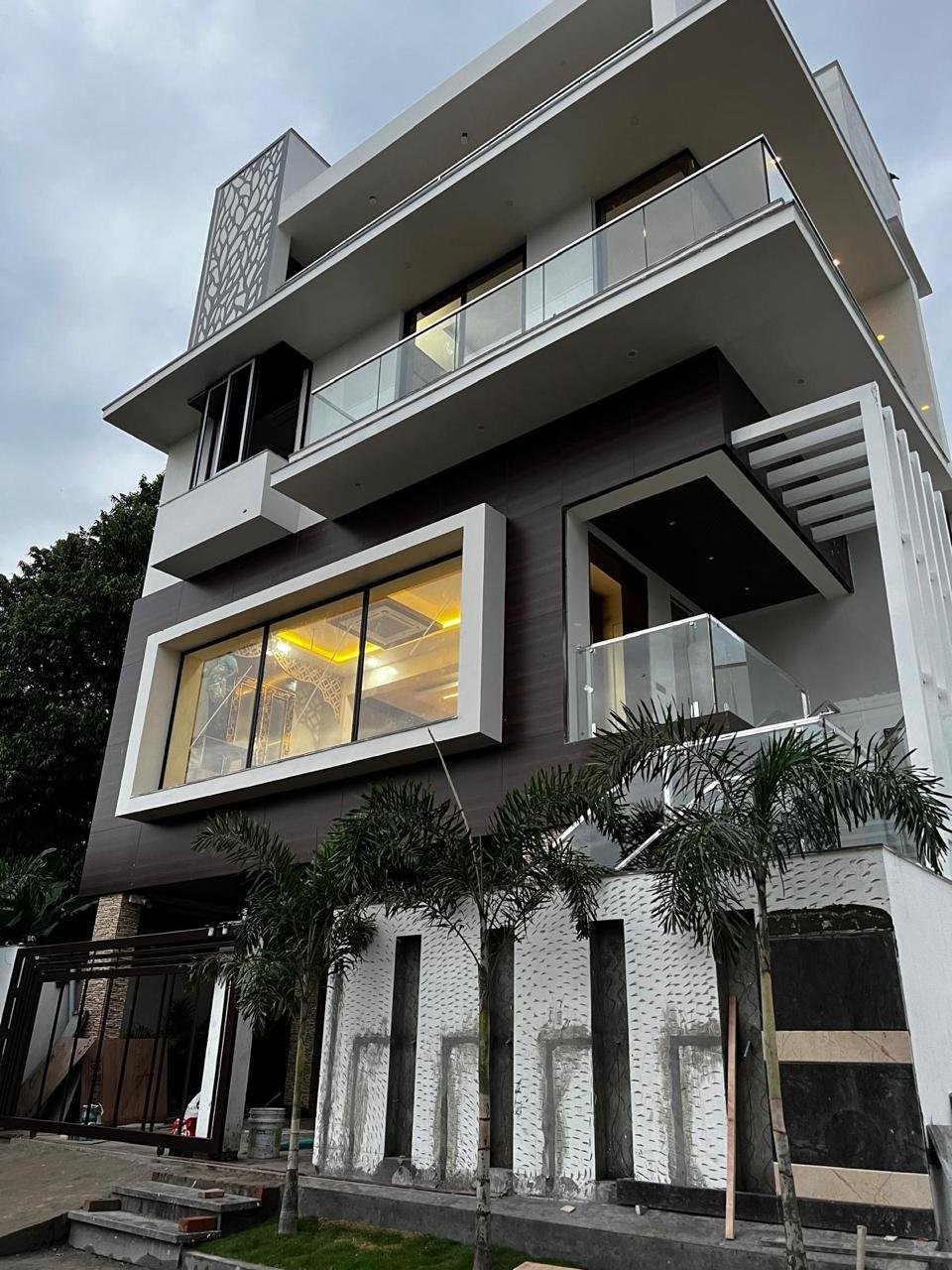
7. The five substitution tricks to watch for
These are the patterns we see most often when reviewing quotations written by other contractors for clients who come to us for a second opinion.
- “Or equivalent” without a grade: a phrase that legally allows anything from a premium primary bar to a local rerolled one
- Grade downgrade, brand upgrade: quoting “Tata Tiscon” but delivering Fe 500 instead of the Fe 550D the drawing requires
- Cement brand per bag switches: using the named brand for the visible slab and a cheaper one for the footings nobody photographs
- Aggregate dilution: mixing river sand and M-Sand without declaring the ratio, or accepting silt above 3%
- Specification inflation on paper only: writing M25 in the quotation while batching M20 on site — only a cube test proves it
8. Questions to ask before you sign any construction agreement
- What exact steel grade and brand is in my package, and does the structural drawing specify the same grade?
- Is the concrete M20 or M25, and will you provide cube test results at 7 and 28 days?
- Is the aggregate river sand or M-Sand, and how is silt content verified?
- What happens if a named brand is out of stock — who approves the substitute and how is the price adjusted?
- Is the ₹35–₹45 per litre underground sump, the compound wall and the EB connection inside or outside this rate?
Frequently asked questions
Which steel brand is best for house construction in Chennai?
For a house in Chennai, Fe 550D TMT steel is the standard choice because of its high yield strength and superior elongation. ARS and Isteel are the workhorses of our Standard and Premium packages, while Tata Tiscon and JSW sit in the Luxury package. What matters more than the brand name is that the grade, the heat number and the BIS licence are all verifiable on the invoice and on the bar itself.
Is Fe 500D or Fe 550D better for a G+1 house?
Fe 500D has 500 N/mm2 yield strength and Fe 550D has 550 N/mm2. For a G+1 or G+2 residential structure in Chennai, Fe 550D lets you achieve the same structural capacity with slightly less steel tonnage, which usually offsets the higher per-kg price. Your structural drawing should specify the grade; never let a contractor decide it on site.
Which cement is best for slab casting — OPC 53 or PPC?
For slab casting, columns and beams, OPC 53 grade gives faster strength gain and is the safer specification for RCC work. PPC is perfectly good for plastering, brickwork and non-structural fills. Blending them is fine as long as both are ISI-certified and the bag seals are opened on site in front of you.
Can I change the steel or cement brand inside my package?
Yes. Any specification can be upgraded or swapped before the agreement is signed, and the difference is quoted in writing first. Mix-and-match is common — many clients keep the Standard package flooring but move up to Tata Tiscon for the structural frame.
How do I verify that the promised brand actually arrived on site?
Ask for three things on every delivery: the GST invoice showing the brand and grade, the mill test certificate or batch/heat number, and the weighbridge slip for steel. Then match the rolling marks embossed on the rebar itself against the claimed brand. Any of those three missing is a red flag.
See the Full Brand Sheet for Your Tier
Compare steel, cement, flooring, fittings, windows, paint and electrical specifications across all four packages — ₹1,949 to ₹2,900 per sq ft.
View the Specification ComparisonReady to Build Your Dream Home in Chennai or Vellore?
Get a 100% complimentary architectural CAD layout review, municipal setback analysis (CMDA/DTCP), and a legally binding itemized BOQ contract with guaranteed zero hidden charges.